October 10, 2026
The short answer
Alcohol can trigger episodes in some people with atrial fibrillation (AFib), and heavier drinking is associated with developing AFib over time. Reducing alcohol has also lowered recurrence in a randomized trial of regular drinkers with AFib. But research cannot calculate your personal trigger dose or establish a universally safe drinking threshold. For people with AFib pursuing rhythm control, U.S. guidelines recommend minimizing or eliminating alcohol. (pubmed.ncbi.nlm.nih.gov)
Symptoms come before statistics. If you have chest pain or pressure, call 911. Seek emergency help for possible stroke symptoms, such as face drooping, arm weakness or speech difficulty—even if they disappear. Do not assume symptoms after drinking are simply a hangover or “holiday heart.” (heart.org)
1. Separate an immediate trigger from a long-term risk
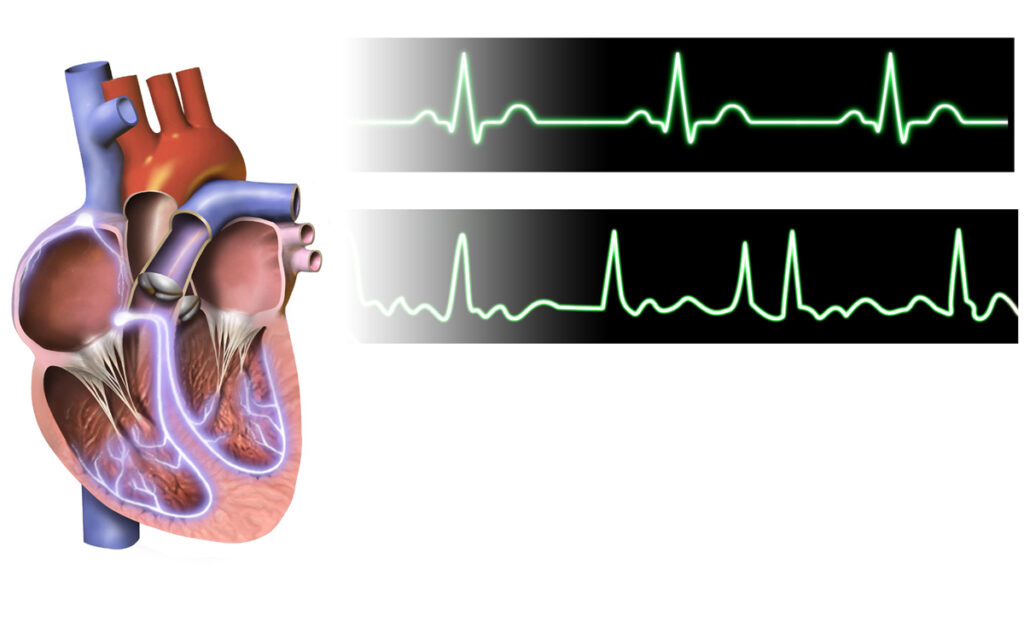
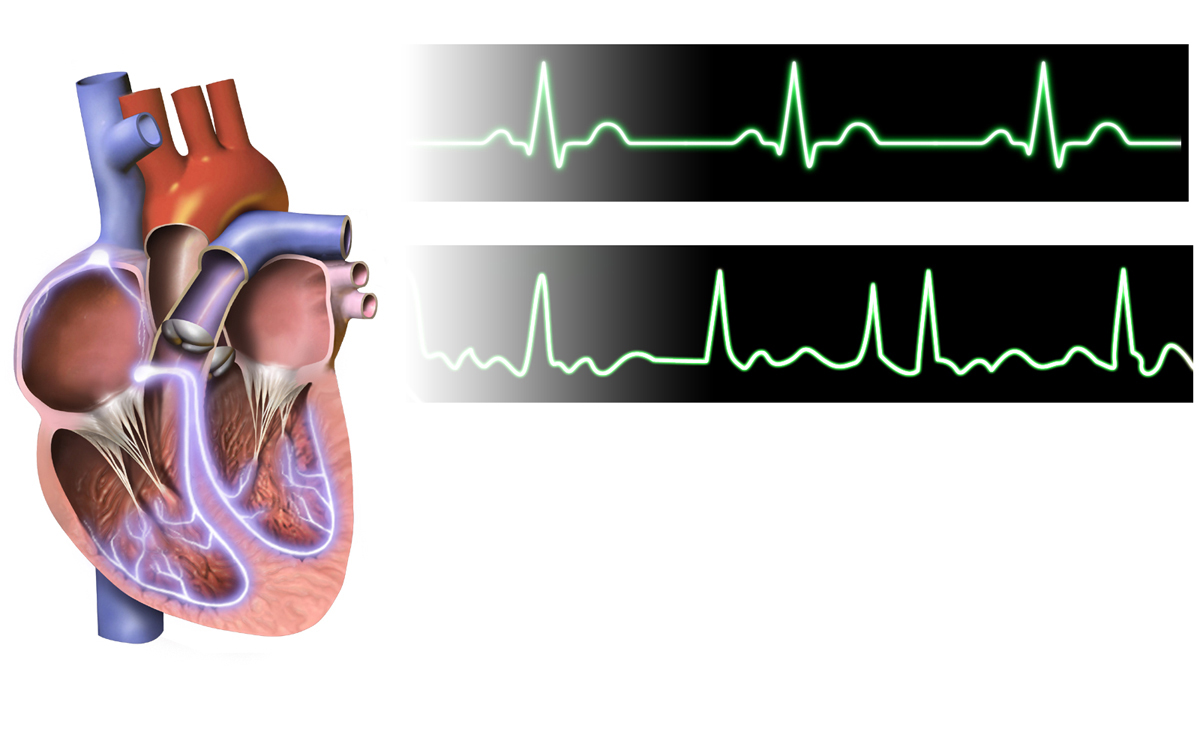
AFib is an abnormal heart rhythm involving the heart’s upper chambers. It can increase the risk of blood clots and stroke. Palpitations describe a sensation—such as pounding, fluttering or racing—not a confirmed diagnosis. An initial AFib diagnosis requires a clinician’s review of an electrical heart recording; symptoms or a pulse-based watch alert alone are insufficient. (cpr.heart.org)
Alcohol research asks several different questions:
- Immediate triggering: Is an AFib episode more likely shortly after drinking in someone who already has AFib?
- Long-term development: Are people with certain drinking habits more likely to receive a new AFib diagnosis over years?
- Recurrence: Does reducing drinking help people with established AFib have fewer episodes?
These questions require different study designs. The acute-trigger study discussed below enrolled people with existing AFib. The long-term cohort investigated new diagnoses. The alcohol-reduction trial tested a change in behavior after AFib was already present. Their results are not interchangeable. (pubmed.ncbi.nlm.nih.gov)
Before interpreting a headline, ask: Who was studied, what outcome was measured, and over what period?

2. What an acute-trigger study found within hours of drinking
A 2021 study followed 100 adults with intermittent, or paroxysmal, AFib for four weeks. Their average age was 64; 79% were men and 85% were White. Participants wore continuous electrocardiogram (ECG) monitors and alcohol sensors, and recorded drinking in real time. This was stronger than asking people months later what they remembered. (pubmed.ncbi.nlm.nih.gov)
Researchers used a case-crossover design, comparing periods within the same person. An AFib episode was associated with:
- About twice the odds of one alcoholic drink in the preceding four hours.
- More than three times the odds of at least two drinks in that period. (pubmed.ncbi.nlm.nih.gov)
This supports alcohol as a possible near-term trigger in susceptible people. It does not mean one drink gives everyone twice the probability of AFib. The reported measure was an odds ratio, not a personal absolute-risk estimate.
The study was not randomized. Other circumstances accompanying drinking could still help explain the association. Its findings also cannot automatically be applied to people without diagnosed AFib. (pubmed.ncbi.nlm.nih.gov)
Practical check: An episode after drinking deserves attention, but timing alone does not prove its cause.
3. What prospective cohorts tell us about developing AFib
A prospective cohort records people’s characteristics and follows them forward. Researchers do not assign alcohol consumption; they observe existing habits.
A 2021 pooled community-based study drew on 107,845 participants. Their median age was about 48, and nearly half were men. Researchers recorded 5,854 new AFib cases over a median follow-up of 13.9 years. Each additional 12 grams of alcohol per day was associated with a hazard ratio of 1.16 for new AFib—a higher relative rate over follow-up. (esc365.escardio.org)
That is not a 16-percentage-point increase, and it does not mean 16% of drinkers will develop AFib.
The analysis considered cardiovascular risk factors, but drinking was not randomly assigned. People who drink differently may also differ in health, smoking, diet, activity or other characteristics. Statistical adjustment can address measured differences; it cannot guarantee that every relevant difference has been removed. Observational alcohol studies remain vulnerable to confounding. (esc365.escardio.org)
Practical check: A result based on average daily intake does not, by itself, establish whether concentrating that intake into one evening produces the same risk.
4. Why systematic reviews disagree about lower intake
A systematic review searches for studies using specified criteria. A meta-analysis combines their results. Combining studies can reveal broader patterns, but it does not remove weaknesses in the original research.
A 2022 meta-analysis included 13 prospective studies, representing more than 10 million participants and 214,365 AFib cases. Overall, each additional drink per day was associated with a 6% higher relative risk. The researchers standardized a drink to 12 grams of alcohol. Results differed across studies and sex subgroups, and the authors said they could not derive a recommended intake for preventing AFib. (frontiersin.org)
A 2026 meta-analysis reached a different conclusion at lower intake. Across 26 observational studies involving nearly 15 million people, very high consumption—more than 60 grams daily—was associated with higher AFib risk. Some lower-intake categories had lower observed risk than the no-alcohol group. The authors explicitly cautioned that these were associations, not causal effects. (esc365.escardio.org)
Do not ignore that disagreement. Equally, do not turn a lower observed risk into a recommendation to start drinking.
Important checks include:
- How did researchers define intake categories?
- Who was included in the comparison group?
- How accurately was drinking reported?
- Which potential confounders were considered?
Self-reported intake, differences between studies and incomplete adjustment limit interpretation. A category with no statistically clear increase is not proof of safety. (frontiersin.org)
5. What a randomized reduction trial adds
Randomized trials provide stronger evidence about the effect of changing behavior because assignment helps balance other differences between groups.
In a 2020 Australian trial, 140 adults with AFib who consumed at least 10 study-defined drinks weekly were assigned either to abstain or to continue usual drinking. Participants averaged 62 years old, and 85% were men. One study drink contained approximately 12 grams of alcohol. (pubmed.ncbi.nlm.nih.gov)
The abstinence group’s average consumption fell from 16.8 to 2.1 drinks weekly; the comparison group also reduced intake somewhat. Over six months, after a two-week period excluded from recurrence assessment:
- AFib returned in 37 of 70 participants, or 53%, assigned to abstinence.
- It returned in 51 of 70, or 73%, assigned to usual drinking. (pubmed.ncbi.nlm.nih.gov)
That is an approximately 20-percentage-point absolute difference, using the rounded percentages. Time spent in AFib was also lower in the abstinence group. (pubmed.ncbi.nlm.nih.gov)
The trial supports substantial reduction for regular drinkers with established AFib. It does not establish the effect in occasional drinkers or people without AFib. Recurrence in the intervention group also shows why reduction should not be described as a guaranteed cure.
6. A worked example: relative risk is not your personal prediction
The following numbers are hypothetical, not results from an alcohol study.
Imagine a five-year study reports a 20% relative-risk increase in one group.
| Five-year risk in the comparison group | Risk after applying a hypothetical 20% relative increase | Absolute difference |
|---|---|---|
| 1%, or 10 people per 1,000 | 1.2%, or 12 per 1,000 | 0.2 percentage points; 2 per 1,000 |
| 10%, or 100 people per 1,000 | 12%, or 120 per 1,000 | 2 percentage points; 20 per 1,000 |
The calculation is:
Comparison risk × 1.20 = estimated group risk
The same relative increase produces different absolute differences because the starting risks differ.
Even when a study reports both measures, its group average is not your personal forecast. To interpret it, you would need to consider how closely you resemble the participants and whether the exposure and follow-up match your situation.
Also check the statistical measure. A risk ratio, odds ratio and hazard ratio are not interchangeable. Do not insert the acute study’s odds ratio or the cohort’s hazard ratio directly into this simple risk-ratio calculation. Those studies measured different relationships. (pubmed.ncbi.nlm.nih.gov)
Nothing in this hypothetical example identifies a safe number of drinks.
7. Count alcohol accurately—and avoid common interpretation mistakes
In the United States, one standard drink contains 14 grams of pure alcohol, approximately:
- 12 fluid ounces of beer at 5% alcohol by volume.
- 5 fluid ounces of wine at 12%.
- 1.5 fluid ounces of spirits at 40%. (niaaa.nih.gov)
The studies above often used 12 grams, so their “drink” is not identical to a U.S. standard drink. A large wine pour or mixed drink may also contain more than one standard drink. Check serving volume and alcohol strength, not just the number of glasses. (pubmed.ncbi.nlm.nih.gov)
Avoid these common mistakes:
- Mixing populations: A finding about new AFib does not answer recurrence in diagnosed AFib.
- Mixing time frames: Four-hour associations are not lifetime-risk estimates.
- Ignoring absolute risk: “Higher risk” needs a comparison and a period.
- Treating an average as a limit: A pooled estimate cannot identify your individual trigger dose.
These distinctions follow directly from the different populations, outcomes and measurement methods used in the studies. (pubmed.ncbi.nlm.nih.gov)
8. Turn the evidence into a clinician conversation
For people with AFib seeking to restore or maintain normal rhythm, the 2023 U.S. guideline recommends minimizing or eliminating alcohol to reduce recurrence and time spent in AFib. Alcohol reduction belongs within comprehensive care, not in place of assessment, rhythm treatment or stroke-risk management. The 2024 European guideline likewise puts associated conditions and risk factors at the center of AFib care. (professional.heart.org)
Consider bringing these questions to your appointment:
- “Does my symptom pattern warrant an ECG or longer rhythm monitoring?”
- “Given my AFib and drinking pattern, should I avoid alcohol completely?”
- “How should I record episodes without becoming overly focused on checking my pulse?”
- “What other health factors should we address?”
- “What symptoms should prompt urgent care rather than waiting?”
For the discussion, consider noting drink sizes, alcohol strength, timing, symptoms and any available device recordings. Do not deliberately drink to test whether you can reproduce an episode, and do not delay care to finish a diary.
If you have drunk heavily for a prolonged period, seek medical help before making abrupt changes. Alcohol withdrawal can be life-threatening; a supported plan is safer than attempting a home detox. (rethinkingdrinking.niaaa.nih.gov)
For celebrations, you can choose an alcohol-free option without first calculating a personal percentage risk. The evidence can guide a decision, but it cannot promise that any specific amount will—or will not—cause an episode.