Quick answer: Make alcohol-free drinks easy to find, clearly identify anything containing alcohol, and accept “no thanks” without asking for an explanation. Offer appealing choices, tell guests what to expect before they arrive, and keep the celebration focused on spending time together—not drinking.
Important safety exception: Anyone concerned about alcohol dependence should seek medical advice before abruptly stopping. Withdrawal after prolonged heavy drinking can be life-threatening. An alcohol-free party is not a detox plan. (niaaa.nih.gov)
October 10, 2026
1. Decide what “less alcohol” means for your celebration
Start with a practical decision: will the event be entirely alcohol-free, or will you serve alcohol alongside equally accessible alternatives?
Either arrangement can be communicated without commenting on anyone’s health or drinking history. For an alcohol-free event, make the boundary clear in the invitation. For a mixed event, decide which alcoholic drinks you will offer, how you will identify them, and where the alcohol-free choices will be served.
Try wording such as:
- Alcohol-free event: “Join us for dinner and a celebration. We’ll have alcohol-free drinks, sparkling water and plenty of food. Please leave alcoholic drinks at home.”
- Mixed event: “We’ll have alcoholic and alcohol-free drinks, with ingredients clearly listed. Choose whatever suits you—no explanation needed.”
- Private preference check: “Is there a drink you’d enjoy having available? You don’t need to tell me why.”
Avoid promising a “heart-safe party.” For people with atrial fibrillation, or AFib, who are pursuing rhythm control—a treatment approach aimed at maintaining a normal rhythm—the 2023 U.S. guideline recommends minimizing or eliminating alcohol to reduce recurrence and the amount of AFib they experience. That recommendation does not establish that a particular mocktail prevents arrhythmias or guarantees a symptom-free evening. (heart.org)
Your role as host is to make choices clear and respect them, not decide what another person can safely drink.
2. Read labels: “non-alcoholic” does not always mean no alcohol
Check the actual alcohol statement rather than relying on the product name, bottle design or placement in a store.
In the United States, the Alcohol and Tobacco Tax and Trade Bureau, or TTB, gives these meanings for malt beverage labels:
| Label wording | What TTB permits for malt beverages |
|---|---|
| “Non-alcoholic” | Must be accompanied by a statement that the beverage contains less than 0.5% alcohol by volume |
| “Alcohol free” | The beverage must contain no alcohol |
| “Low alcohol” or “reduced alcohol” | The beverage must contain less than 2.5% alcohol by volume |
These are malt-beverage rules, not a universal definition covering every wine alternative, spirit alternative or mixed drink. (ttb.gov)
For hosting, use this simple checking routine:
- Read each packaged drink’s alcohol statement.
- Keep the original container available for guests to inspect.
- Check every ingredient before describing a homemade drink as alcohol-free.
- If alcohol content is unclear, say so and offer a straightforward alternative.
Do not relabel a product stating “less than 0.5%” as “0%.” Copy the manufacturer’s wording accurately.
Put clear cards beside pitchers and dispensers. “Fruit punch” tells guests about flavor, not alcohol content. Better wording is “Fruit punch—ingredients listed below; no alcoholic ingredients added,” provided that accurately describes your recipe.
If a guest needs to avoid alcohol completely, let them inspect the packaging and choose. Do not reassure them that trace alcohol “doesn’t count.”
3. Offer a short, appealing menu—not one token alternative
You do not need an elaborate mocktail station. A small menu with different flavors and levels of sweetness is easier to organize and explain.
Here is a suggested menu to adapt. These are serving ideas, not drinks with proven heart-health benefits.
| Drink | Suggested ingredients | Suggested menu description |
|---|---|---|
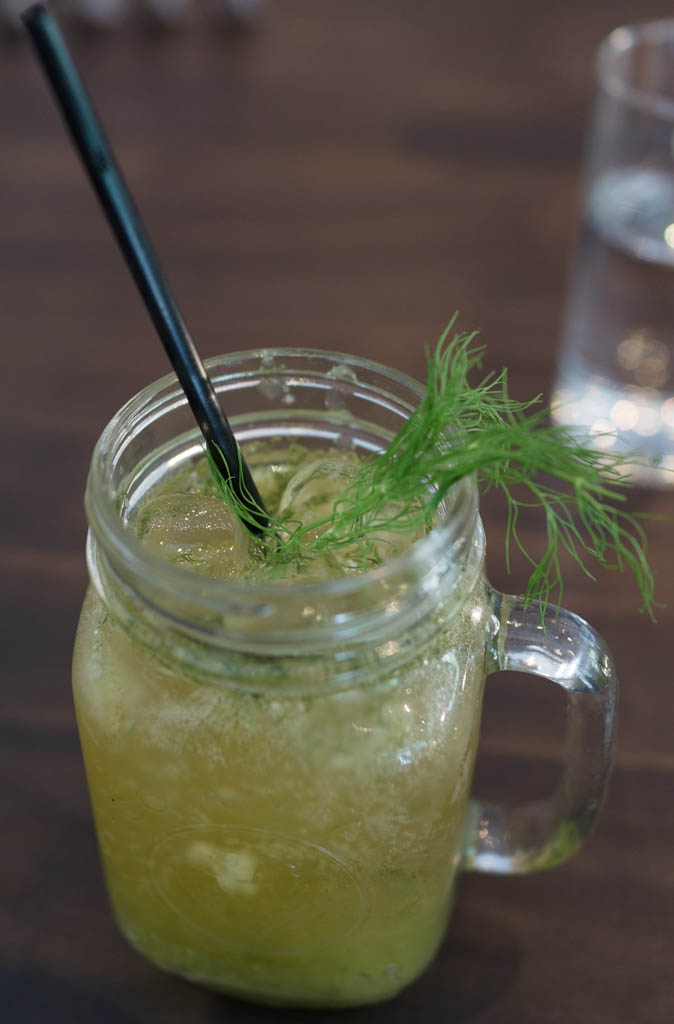
| Cucumber–mint cooler | Sparkling water, cucumber and fresh mint | “Sparkling water with cucumber and mint; no alcoholic ingredients added” |
| Citrus fizz | Sparkling water with lemon or orange juice | “Citrus and sparkling water; ingredients listed” |
| Apple–ginger spritz | Apple juice and a ginger soda whose label you have checked | “Apple juice and ginger soda; packaging available” |
| Still or sparkling water | Plain water, with optional citrus slices | “Plain water; garnish optional” |
| Packaged alcohol-free option | A product checked before serving | Use the manufacturer’s exact alcohol statement |
| Optional alcoholic selection | A limited selection in original containers | “Contains alcohol”; display available strength information |
Check packaged ingredients before printing the final menu. If you add another ingredient, update the card rather than assuming the original description still applies.
For a welcoming setup:
- Put alcohol-free choices where guests first approach the drinks.
- Offer suitable glasses, ice and garnishes to everyone.
- Keep plain water readily available.
- Use separate, clearly identified pitchers for alcoholic and alcohol-free drinks.
- Ask before refilling any glass.
- Make a toast possible with whatever drink someone already has.
A guest who wants plain water should not have to accept a cocktail-style alternative. Ask what they prefer instead of deciding which option feels sufficiently festive.
4. Understand strength and serving size before calling a drink “lighter”
A lower alcohol percentage does not necessarily mean less alcohol in the amount someone drinks.
NIAAA defines one U.S. standard drink as 14 grams, or 0.6 U.S. fluid ounces, of pure alcohol. Examples include 12 fluid ounces of beer at 5% alcohol, 5 fluid ounces of wine at 12%, or 1.5 fluid ounces of spirits at 40%. Actual strengths and serving sizes vary. (rethinkingdrinking.niaaa.nih.gov)
Worked example: a weaker drink in a larger serving
Using the NIAAA definition:
- A 12-fluid-ounce drink at 5% contains 12 × 0.05 = 0.6 fluid ounces of alcohol.
- A 24-fluid-ounce drink at 2.5% contains 24 × 0.025 = 0.6 fluid ounces of alcohol.
Both contain one U.S. standard drink, despite the second having half the alcohol percentage. This is an illustrative calculation, not a recommended portion or personal safety threshold. (rethinkingdrinking.niaaa.nih.gov)
Likewise, adding water or another mixer to a fixed amount of alcohol changes its concentration, but does not remove the alcohol already poured.
If you serve alcohol, consider measured pours and display the product information. Avoid describing a large mixed drink as “just one” without knowing its ingredients and amounts.
For guests with AFib, the useful question is not “Which drink sounds lightest?” but “What has my clinician advised about alcohol in my situation?” The guideline’s recommendation to minimize or eliminate alcohol for rhythm control should not be replaced by a host’s estimate of a safe amount. (heart.org)
5. Make “no thanks” the end of the conversation
Agree with anyone helping serve drinks that a refusal needs no follow-up question.
A useful host response is:
“Of course. We have sparkling water, citrus fizz and plain water. What would you like?”
Avoid “Are you sure?”, “Just one won’t hurt,” or questions about pregnancy, medication or recovery. Guests should not need to disclose private information to receive a different drink.
Guests can prepare a short refusal before arriving:
- “No thanks—I’m not drinking tonight.”
- “I’ll have sparkling water, please.”
- “That doesn’t work for me, but thank you.”
- “I’m following my clinician’s advice.”
- “I don’t want to discuss it. Let’s talk about something else.”
If someone keeps offering, repeat the same sentence rather than supplying more personal detail. A firmer version is: “Please stop offering me alcohol.”
Hosts can also remove drinking-centered rituals. Replace a drinking game with another activity, and do not insist that everyone use the same beverage for a toast.
For a guest planning ahead, a private message can be enough: “Could you keep an unopened drink I choose available for me?” The host can meet that request without announcing it to the group.

6. Support someone who wants to cut down without policing them
A supportive conversation is different from monitoring another person’s glass.
Choose a private moment and ask permission:
“You mentioned wanting to drink less. Would it help if I made sure your preferred alternative was available?”
Offer specific help: buying a requested drink, planning an alcohol-free gathering, or helping them find professional support. Ask what they want rather than making them accountable to you for every choice.
If you are concerned about their drinking, describe what you have noticed without assigning a diagnosis. For example: “You said you’ve tried to cut down several times and found it difficult. Would you like help making an appointment?”
NIAAA identifies repeatedly being unable to cut down, drinking more or longer than intended, and continuing despite health or relationship problems as possible symptoms of alcohol use disorder. A healthcare professional assesses the pattern and severity; a host should not diagnose it from one evening. (rethinkingdrinking.niaaa.nih.gov)
Professional help is not limited to residential programs. NIAAA describes primary-care and outpatient treatment options, and its Alcohol Treatment Navigator helps people locate evidence-based care. (niaaa.nih.gov)
Avoid shame, public challenges or “prove you can stop” language. Practical support can include respecting the person’s decision not to attend.
7. Keep withdrawal and heart symptoms outside the party plan
An alcohol-free menu cannot make an abrupt change in drinking medically safe for everyone.
People who have been drinking heavily for a prolonged period may develop dangerous withdrawal when they stop suddenly. NIAAA lists symptoms including tremor, sweating, nausea, elevated pulse, seizures and delirium tremens, a severe withdrawal condition. Anyone worried about dependence or previous withdrawal should seek medical advice before abruptly stopping, rather than using a celebration as a home detox attempt. (niaaa.nih.gov)
Do not create a tapering schedule for a guest or try to manage suspected withdrawal with party drinks.
Heart symptoms also require their own response. Call 911 for possible heart-attack symptoms, such as chest pressure or discomfort lasting more than a few minutes or returning, or possible stroke symptoms such as sudden weakness or trouble speaking. Do not wait for a drink, food or rest to fix the problem. (nhlbi.nih.gov)
Before guests arrive, make one final check:
- Are alcohol-containing drinks clearly identified?
- Are original packages and ingredient lists available?
- Can guests choose plain water without asking?
- Do helpers know not to pressure people or refill without permission?
- Is the invitation clear about whether alcohol will be served?
- Have you avoided health claims about the menu?
The aim is a celebration where people can make informed choices, enjoy the occasion and keep their reasons private—not a promise that any drink prevents a heart rhythm problem.